


Who protects digital delivery workers? | Behind the Wig
發佈: 2026-11-23 07:00
撰文: 大律師 / Barristers


Norman Hui
Barrister
Principal Lecturer HKU
The convenience of delivery to our homes for goods or food grows to become increasingly popular with the buzz of scooters roaming the streets of Hong Kong. But what about the legal protection of rights for the couriers involved?
Recently a “gig-economy” courier accident in Hong Kong has exposed some significant deficiencies in the existing legal framework governing digital platform labour. In May 2026 there was a traffic accident involving a 53-year-old Keeta courier who suffered largely permanent cervical spinal paralysis where he was distracted by a time-sensitive order notification while travelling between completed deliveries. The accident raises unresolved questions concerning employment classification, work-injury compensation, and the legal consequences of algorithmic management.
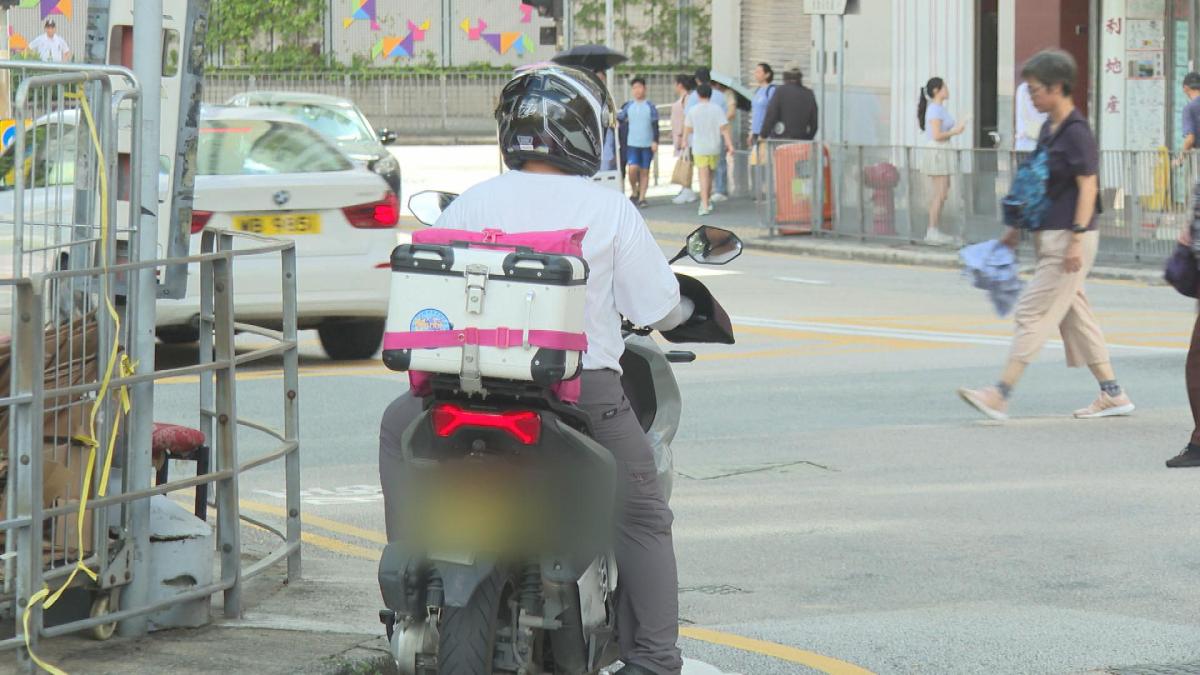
The Employees' Compensation Ordinance (Cap. 282) (“ECO”) provides statutory compensation only to persons employed under a contract of service. Digital delivery platforms generally characterise couriers as self-employed independent contractors and therefore injured couriers are usually refused the protections afforded under the ECO since there is a need to first establish employee status. In the absence of a courier being found as an employee proper, they are confined to compensation available under commercial insurance arrangements maintained by the digital platforms which may provide materially lower monetary compensation after an accident occurs.
In July 2026, the Labour and Welfare Bureau proposed a dedicated but separate statutory compensation regime from the ECO for digital delivery platform couriers that has worked out compensation formulas broadly comparable to those available under the ECO for serious injuries and fatalities. However, the proposed statutory regime preserves the classification of couriers as independent contractors as opposed to employees and this creates a narrower category of protected work activity. The proposed statutory coverage arises only from the moment a delivery task is accepted until its completion, including the return to the vehicle used after delivery, but periods during which couriers remain logged into the platform awaiting or competing for orders would fall outside the proposed statutory regime.
Couriers require “standby” periods that are unavoidable and integral to digital platform work, particularly where they must remain continuously available and responsive to algorithmically generated dispatch notifications in order to secure income. Under the proposed legal framework, a courier injured while responding to an order alert between active deliveries would be at risk in receiving no statutory compensation notwithstanding that the risk may have arisen directly from the operation of the digital platform itself.
There remain broader questions concerning the nature of algorithmic control in the digital delivery platform work scenario. Although digital delivery platform operators maintain that couriers work independently, an argument raised by labour advocates is that digital dispatch systems, performance metrics, incentive structures, acceptance-rate monitoring, and time-sensitive order allocation mechanisms operate as functional equivalents of managerial supervision and thus couriers should be classified as employees and receive full legal protection. The equivalent comparison is whether such technological forms of control are sufficient to justify extending employment-related protections notwithstanding different contractual descriptions that would put couriers working for digital delivery platforms out of reach for legal protection.
Digital delivery platforms commonly retain exclusive access to digital records, including GPS data, dispatch logs, acceptance histories, and in-app communications. Problems may arise when injured couriers seeking compensation, including digital delivery platforms resisting the provision of information to couriers trying to prove their accident or establishing the relationship between the digital delivery platform operator and the injury sustained. This is especially where the parties are or would be involved in litigation against each other and the digital delivery platform would be resistant to such a request from the courier on the grounds that such information would be too wide in its scope and infringe upon the digital delivery platform’s confidential commercial information. Such an issue remains unresolved by the proposed legislation at present.
Another legal question which arises is whether the statutory protection should depend upon whether it is necessary to establish a formal contractual relationship or whether the law should look upon the economic reality of the digital delivery platform work. The law under the ECO is wide enough to include questions of fact to potentially include couriers of digital delivery platforms to be considered as employees but this is subject to litigation risks that the couriers may be unsuccessful in proving they were an employee after expensive but risky litigation. The proposed legislative framework represents a step towards recognising the risks faced by digital delivery platform couriers but the restrictive definition of compensable working time leaves substantial gaps in protection for couriers. Excluding standby periods risks denying compensation where injuries arise from the very algorithmic systems that a digital delivery platform business model depends on.
Accordingly, future litigation and legislative reform are likely to focus on employment status, algorithmic control, and the extent to which availability for digital delivery platform work may itself be recognised as work for the purposes of statutory protection.
Mr. Norman Hui is Chairman of the Artificial Intelligence and Ethics Committee, Co-Chairman of the Pro Bono Affairs Committee, Member of the Intellectual Property Committee, Personal Injuries Committee and Continuing Education Committee of the Hong Kong Bar Association. His private practice and teaching at the University of Hong Kong are in the same or similar areas of litigation.


Behind the Wig is a weekly legal column written by practicing barristers specialising in criminal, civil, and commercial law. Drawing on their legal expertise and practical experience, or sharing their observations and insights as barristers, they analyse social issues, encourage readers to interpret everyday matters through a legal mindset, and promote the spirit of the rule of law.
The views expressed in this article are the author’s own and do not reflect TVB’s editorial stance.
更多新聞
古德哈特定律|假髮背後

泰斗與少年 – 香港普通法的兩道風景|假髮背後
先敬羅衣後敬人|假髮背後
憑誰來定錯對|假髮背後
從繳費學藝到師傅發津貼 — 大律師行業學徒制的變與不變|假髮背後
暑假|假髮背後
讀書萬卷不讀律|假髮背後
羅生門(He said, She said)|假髮背後
熱門新聞


條款及細則
條款及細則
隨時隨地觀看新聞,立即下載


Copyright 2026 TVB Limited