


The Proposed Text and Data Mining Exception|Behind the Wig
發佈: 2026-11-09 07:00
撰文: 大律師 / Barristers


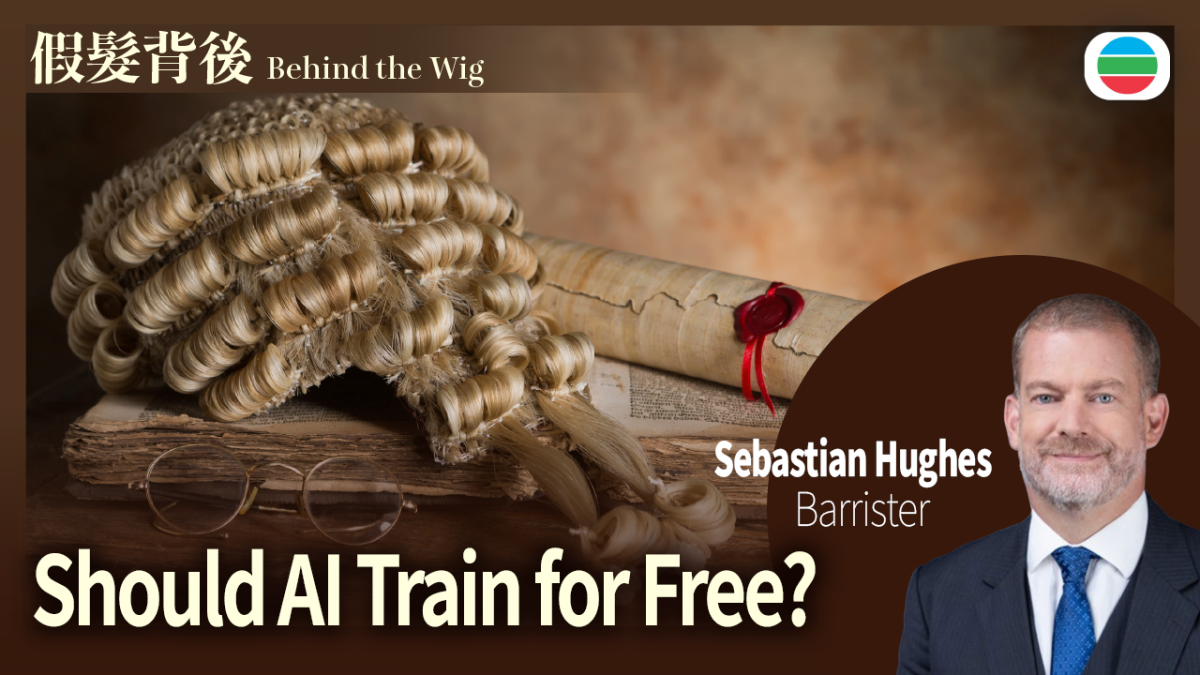
Sebastian Hughes
Barrister
The use of copyright material to train generative AI models has created a lot of publicity. On the one hand, AI companies are lobbying governments to pass legislation to allow AI models to scrape online digital content for free – unless copyright owners expressly reserve their rights via an “opt-out” mechanism. Such a legislative framework has already been introduced in the EU.
Elsewhere, copyright owners and artists (most notably in the United Kingdom) have publicly opposed any proposed “text and data mining exception” – arguing that it devalues human creativity; that opt-out mechanisms are impractical and hard to implement; and (somewhat theatrically), that allowing the exception is tantamount to copyright theft.
As a result of the backlash led by high profile artists and musicians, the Government in the United Kingdom has shelved its plan to follow the EU model. The law there remains unchanged. Reproducing online digital content to train AI models requires permission from the copyright owner, and payment of licence fees.
The Government in Australia is currently considering its position. In weighing up whether to alter the traditional mandatory licensing regime, one of the considerations is economic. Allowing a text and data mining exception may encourage AI companies to invest in Australia including constructing data centres. Critics argue this goes against the Government’s long history of protecting creative industries and artists.
In addition to a proposed opt-out mechanism, additional proposals in Australia include (1) a collective levy model (akin to existing copyright collecting societies), whereby AI companies would pay a fee for use of unprotected digital content to a centralised body, which would then pay royalites to copyright owners; and (2) a model whereby AI companies would negotiate directly with rights-holding companies and licensors to access unprotected material.
These issues go to the core of copyright. Since its inception, copyright law has always existed in order to encourage creative endeavour through granting exclusive reproduction rights to copyright owners. Mandatory licensing goes hand-in-hand with the underlying rationale of copyright law. It is not surprising therefore that copyright owners and artists are up in arms and strongly opposed to any amendments to the law which would allow generative AI models to access and use digital copyright works for free.
Copyright law has, however, also since its inception demonstrated a remarkable ability to embrace technological change and evolve accordingly. There is no reason to believe it will not be able to do so adeptly with respect to generative AI.
The Government in Hong Kong is adopting a more measured and practical approach. Following several rounds of public consultations, the government has postponed plans to introduce a text and data mining exception. Prior to enacting any legislation, the Government intends to release practical guidelines as to how the proposed opt-out mechanism would work. It is hoped that this approach will enable stakeholders to ensure their views are openly considered, and ensure that any amendments to our copyright law strike the appropriate balance between the encouragement and protection of creativity, payment of appropriate licensing fees, and promotion of the new AI industry.
Mr. Sebastian Hughes is a Council Member of the Hong Kong Bar Association and a Member of its Intellectual Property Committee and its Standing Committees on Mainland Affairs and on Welfare and Sports. He practises as a barrister and arbitrator. His practice focuses on intellectual property, commercial, cryptocurrency, white collar fraud, insolvency, company, insurance, employment, matrimonial finance, and costs/taxation matters.

Behind the Wig is a weekly legal column written by practicing barristers specialising in criminal, civil, and commercial law. Drawing on their legal expertise and practical experience, or sharing their observations and insights as barristers, they analyse social issues, encourage readers to interpret everyday matters through a legal mindset, and promote the spirit of the rule of law.
更多新聞
先敬羅衣後敬人|假髮背後

憑誰來定錯對|假髮背後
從繳費學藝到師傅發津貼 — 大律師行業學徒制的變與不變|假髮背後
暑假|假髮背後
讀書萬卷不讀律|假髮背後
羅生門(He said, She said)|假髮背後
《西遊記》第壹佰零壹回之「德里取經」|假髮背後
看醫生要轉介,找大律師為何也要「轉介」?|假髮背後
熱門新聞


條款及細則
條款及細則
隨時隨地觀看新聞,立即下載


Copyright 2026 TVB Limited