
繁

- 简
- 繁
- En


Exit polls: Takaichi's ruling bloc on path to win majority in Japan's lower house vote
News
發佈: 2026-02-09 00:20
撰文: 無綫新聞


Japanese Prime Minister Sanae Takaichi's party is set for a major victory in Sunday's snap election.
Exit polls suggest the ruling coalition will meet its target of securing a majority of 233 seats in the House of Representatives.
Residents braved the torrid winter weather to cast their votes in the early elections of the House of Representatives that began at 7:00 a.m. this morning, the first mid-winter election in 36 years in the country.
1,284 candidates are vying for seats in the Lower House, of which 289 seats will be elected from single-member districts and 176 through proportional representation in 11 regional blocs.
Based on exit polls of Japanese public broadcaster NHK, the main opposition, the Centrist Reform Alliance, is expected to win between 37 and 91 seats, a sharp decrease from 172 seats prior to the election.
The alliance was formed in January by the Constitutional Democratic Party of Japan and the Komeito party.
The polls also showed the ruling coalition of the Liberal Democratic Party (LDP) and Japan Innovation Party could win between 302 and 366 seats. The LDP alone is projected to secure "an absolute stable majority."
The margin would give the alliance overwhelming control in the 465-member lower house of parliament.
Japan's Ministry of Internal Affairs and Communications says the voters turnout, impeded by heavy snowfall in many regions, stood at 26.01 percent at 6 p.m. local time, posting a nearly 3 percentage drop from the last election.
Takaichi called the elections just three months after taking office as Japan's first female prime minister.
She has vowed to suspend the 8 percent sales tax on food and revise security and defence policies to build up Japan's offensive military capabilities, lifting a ban on weapons exports.
Takaichi also wanted to make progress on a right-wing agenda including tougher measures on foreigners and anti-espionage, which resonates with a nationalist audience but could spark civil rights concerns.
The Japanese leader has avoided contentious topics such as ways to fix a diplomatic spat with China over her Taiwan remarks as well as other controversial issues.
Exit polls suggest the ruling coalition will meet its target of securing a majority of 233 seats in the House of Representatives.
Residents braved the torrid winter weather to cast their votes in the early elections of the House of Representatives that began at 7:00 a.m. this morning, the first mid-winter election in 36 years in the country.
1,284 candidates are vying for seats in the Lower House, of which 289 seats will be elected from single-member districts and 176 through proportional representation in 11 regional blocs.
Based on exit polls of Japanese public broadcaster NHK, the main opposition, the Centrist Reform Alliance, is expected to win between 37 and 91 seats, a sharp decrease from 172 seats prior to the election.
The alliance was formed in January by the Constitutional Democratic Party of Japan and the Komeito party.
The polls also showed the ruling coalition of the Liberal Democratic Party (LDP) and Japan Innovation Party could win between 302 and 366 seats. The LDP alone is projected to secure "an absolute stable majority."
The margin would give the alliance overwhelming control in the 465-member lower house of parliament.
Japan's Ministry of Internal Affairs and Communications says the voters turnout, impeded by heavy snowfall in many regions, stood at 26.01 percent at 6 p.m. local time, posting a nearly 3 percentage drop from the last election.
Takaichi called the elections just three months after taking office as Japan's first female prime minister.
She has vowed to suspend the 8 percent sales tax on food and revise security and defence policies to build up Japan's offensive military capabilities, lifting a ban on weapons exports.
Takaichi also wanted to make progress on a right-wing agenda including tougher measures on foreigners and anti-espionage, which resonates with a nationalist audience but could spark civil rights concerns.
The Japanese leader has avoided contentious topics such as ways to fix a diplomatic spat with China over her Taiwan remarks as well as other controversial issues.
更多新聞
影片
Japan expecting scorching summer this year
News2026-07-15


A wild boar injures 4 in Aichi Prefecture
News2026-07-14

影片
Beijing widens export curbs on Japanese dual-use items
News2026-06-29

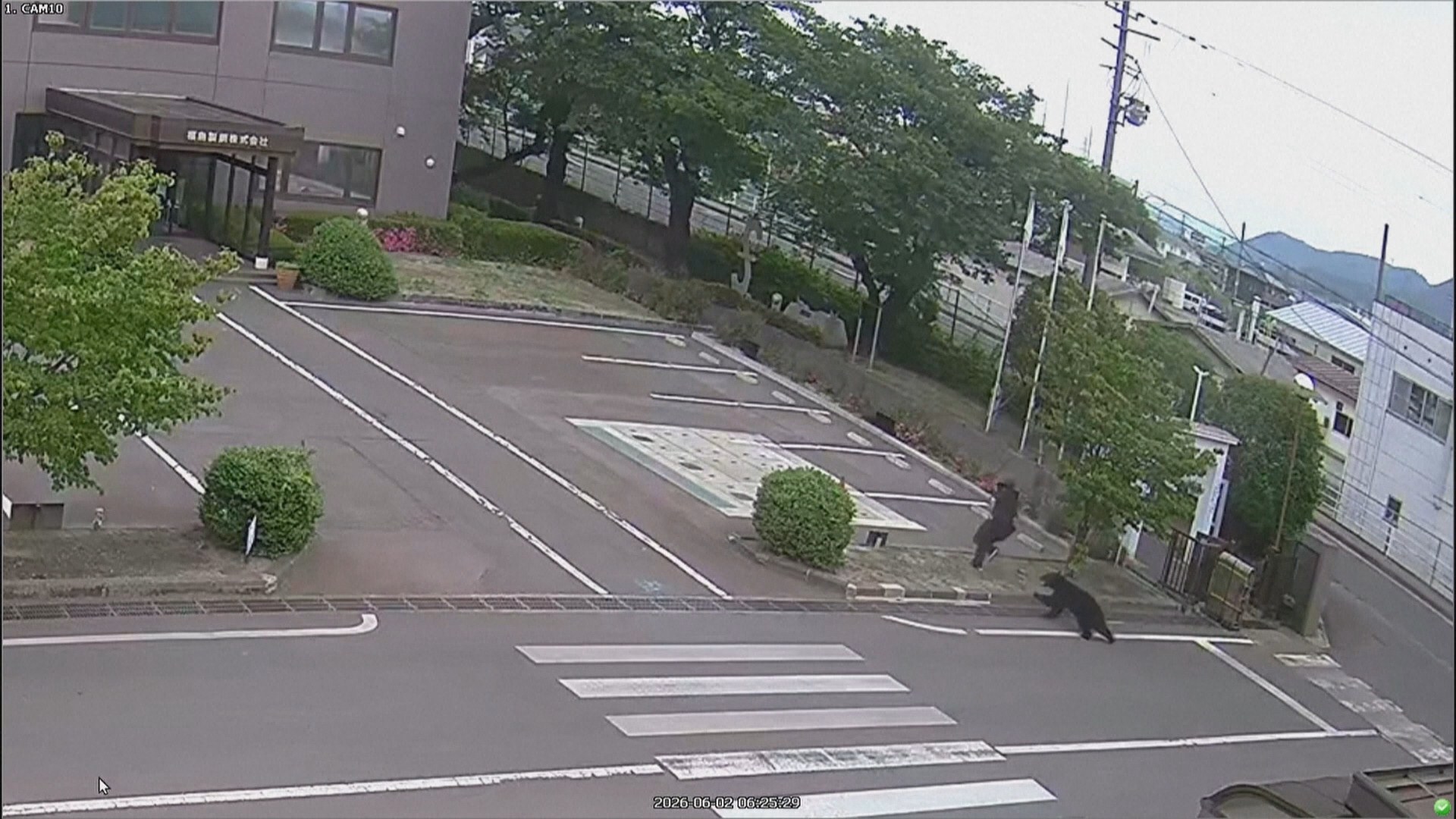
Bear on the loose after attacking four in Fukushima
News2026-06-03


影片
Chinese citizens evacuated from Iran
News2026-03-02
熱門新聞


條款及細則
條款及細則
隨時隨地觀看新聞,立即下載

'%3e%3cpath%20id='路径_2'%20data-name='路径%202'%20d='M579.91,145.916a42.433,42.433,0,1,0,42.528,42.433,41.772,41.772,0,0,0-42.528-42.433m0,68.138a25.8,25.8,0,1,1,23.91-25.705,24.572,24.572,0,0,1-23.91,25.705m-92.9-68.138a42.433,42.433,0,1,0,42.528,42.433,41.772,41.772,0,0,0-42.528-42.433m0,68.138a25.8,25.8,0,1,1,23.911-25.705,24.572,24.572,0,0,1-23.911,25.705m-110.38-55.1v17.956h42.621A37.793,37.793,0,0,1,409.8,199.6a44.037,44.037,0,0,1-33.266,13.135,47.914,47.914,0,0,1,0-95.734,45.836,45.836,0,0,1,32.415,12.854l12.664-12.664a62.75,62.75,0,0,0-45.174-18.144,66.153,66.153,0,1,0,0,131.739,60.2,60.2,0,0,0,45.93-18.9A59.452,59.452,0,0,0,438.154,170.2a58.644,58.644,0,0,0-.946-11.246Zm451.638,14.364a39.409,39.409,0,0,0-36.291-26.933A40.259,40.259,0,0,0,752,188.822a41.49,41.49,0,0,0,42.055,42.432,42.148,42.148,0,0,0,35.344-18.9l-14.459-9.45a24.193,24.193,0,0,1-20.885,11.718,21.546,21.546,0,0,1-20.6-12.852l56.7-23.436ZM770.431,187.5a23.249,23.249,0,0,1,22.21-24.76,16.441,16.441,0,0,1,15.781,9.45Zm-46.023,40.637h18.9V103.577h-18.9Zm-30.525-72.77h-.568a29.385,29.385,0,0,0-22.3-9.449,42.526,42.526,0,0,0,0,85.053,28.908,28.908,0,0,0,22.3-9.449h.663v6.142c0,16.256-8.7,24.854-22.681,24.854a23.431,23.431,0,0,1-21.358-15.12l-16.255,6.71a40.446,40.446,0,0,0,37.8,25.044c21.829,0,40.354-12.853,40.354-44.134V148.468H693.883Zm-21.359,58.594A24.381,24.381,0,0,1,648.9,188.443a24.57,24.57,0,0,1,23.625-25.894,23.909,23.909,0,0,1,22.682,25.894,23.722,23.722,0,0,1-22.682,25.611ZM915.592,103.484H870.985V228.135h18.9V180.883h25.988a38.747,38.747,0,1,0,0-77.4Zm.471,60.1H889.6V120.872h26.461a21.358,21.358,0,1,1,0,42.715m115.012-17.861a34.97,34.97,0,0,0-33.171,18.9l16.539,6.9a17.583,17.583,0,0,1,17.01-9.452,17.958,17.958,0,0,1,19.564,16.066v1.324a41.193,41.193,0,0,0-19.373-4.819c-17.767,0-35.913,9.449-35.913,28.35a28.352,28.352,0,0,0,30.9,27.407,26.277,26.277,0,0,0,23.722-12.191h.661v9.45h17.956v-47.44c-.095-22.115-16.539-34.5-37.9-34.5m-2.268,68.328c-6.047,0-14.552-3.024-14.552-10.585,0-9.45,10.583-13.325,19.751-13.325a33.169,33.169,0,0,1,17.011,4.159,22.588,22.588,0,0,1-22.21,19.751m105.468-65.586-21.357,54.057h-.663l-22.02-54.057H1070.2l33.172,75.6-18.9,42.054h19.374l51.128-117.563ZM966.718,228.135h18.9V103.577h-18.9Zm-840.431-101.5L4.377,4.631A20.131,20.131,0,0,0,.029,18.24V238.72a21.079,21.079,0,0,0,3.4,12.569Zm4.064-3.876,37.8-37.8L25.356,3.214A18.9,18.9,0,0,0,8.912.945Zm89.4-8.695L172.5,87.417l-38.652,39.221,41.3,41.3L219.28,142.8c14.46-7.844,14.46-20.791.472-28.73m-89.4,16.539L7.495,254.974a17.768,17.768,0,0,0,17.768-1.607l144.686-82.219h.566Z'%20fill='%23fff'/%3e%3c/g%3e%3c/svg%3e)


Copyright 2026 TVB Limited