


Zelenskyy praises naval drone strike on Russian Corvette Merkury
發佈: 2026-11-24 20:38
撰文: 無綫新聞


Ukrainian President Volodymyr Zelenskyy praises his security services for a naval drone strike on Russian Corvette Merkury in Libyan waters.
Meanwhile, German Defense Minister Boris Pistorius warns against further escalation following reports of missiles entering Polish airspace last week, saying Russian President Vladimir Putin appeared to be seeking confrontation.
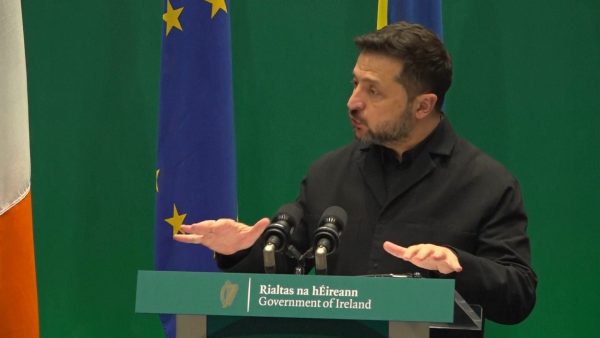
In his nightly address, Ukrainian President Volodymyr Zelenskyy praised the drone strike in Libyan waters. He said it was achieved exclusively with Ukrainian weapons and naval drones. Zelenskyy also said intelligence indicates more upcoming Russian strikes, adding missiles for Patriots are needed here in Ukraine, and awaits necessary decisions from the US.
Authorities in eastern Libya said the Merkury had been docked at the naval base in the coastal city of Benghazi for refuel and resupply under a cooperation agreement between Russia and the eastern-based government in Libya.
Meanwhile, German Defense Minister Boris Pistorius warned against further escalation following reports of missiles entering Polish airspace last week, saying Russian President Vladimir Putin appeared to be seeking confrontation. Speaking at a joint news conference with visiting Ukrainian Defense Minister Yevhenii Khmara in Berlin, Pistorius said the incidents showed "the path Putin wants to take to further provoke." Pistorius also stressed Ukraine bore "a special responsibility" to ensure the war did not spread to the Baltic Sea.
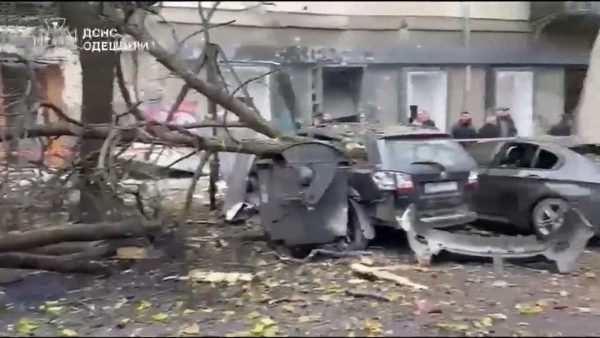
Elsewhere, the United Nations Security Council held a high-level briefing on Russian attacks on critical infrastructure in Ukraine. Alexander De Croo, administrator of the United Nations Development Programme, discussed the situation regarding the impact of war on critical infrastructure such as electricity generation. He said the ongoing war has left a six-gigawatt gap in Ukraine's power generation capacity, leaving hundreds of thousands of citizens without electricity.
Administrator of the United Nations Development Programme ALEXANDER DE CROO: "Ukraine's energy infrastructure suffered damage at an unprecedented scale, leaving a gap of six gigawatts in generation capacity. Extensive repairs helped stabilise the system over the summer, but since mid-July, attacks have intensified. In some cases, energy facilities have been struck again before repair crews could finish their work. Since October, attacks have increasingly targeted the high-voltage substations and the transmission lines supplying the major cities. On 12th November alone, 700,000 families were reportedly left without electricity. This is today far more than an infrastructure challenge. It is a humanitarian challenge. It is a development challenge, and it is a direct threat to civilian resilience. UNDP is working with Ukraine's national local authorities to restore power today while supporting long-term recovery."
更多新聞
Ukraine drones strike bridge linking Russia and Crimea

Ukraine insists EU's participation in talks with Russia

Russia and Ukraine agree to a large prisoner exchange

熱門新聞


條款及細則
條款及細則
隨時隨地觀看新聞,立即下載


Copyright 2026 TVB Limited