

- 简
- 繁
- En


McKinsey Greater China Chair: the Next China is still China
發佈: 2026-08-08 18:41
撰文: 無綫新聞


In an interview with TVB News, the Greater China Chairman of an international consulting company stresses the next China -- is still China.
And the next chapter of the country is likely going to see top class domestic businesses competing among themselves and with outsiders.
China's economic growth in the second quarter stood at 4.3 percent.
with a recent wave of closures among China's popular e-commerce clothing brands -- some boasting over 4.6 million online followers.
Still, the industrial output remained relatively resilient, largely buoyed by AI and advanced manufacturing-related industries.
Joe Ngai, McKinsey's Greater China Chairman, has advised major US and Chinese companies for some 25 years, and rubbed shoulders with business and economic leaders, including at the World Economic Forum in Davos, Switzerland for years.
Despite the apparently mixed economic signals, he believes the next decade is still the China era.
Chairman, McKinsey Greater China JOE NGAI: "You'll see overhang of the real estate bubble, you'll still see decreasing returns to a lot of the infrastructure investments. But on the other hand, all the innovations, all the speed, we call it China speed can be a catalyst for you to accelerate your development to accelerate the speed of how you do things."
While he is bullish about China's continued ascent, he admits it comes at a cost: both the cut-throat competition among local players and increasing difficulties for foreign enterprises to tap profits in the "next China."
JOE NGAl: "It's very painful as an individual company. Local domestic competitors have really matured in every single category. We see Chinese competitors who are as good as or even better than the multinationals who are operating in China."
His advice?
JOE NGAI: "If you're not localised enough, if you're not innovating, if you're not putting all of your R&D in China right now, you're not moving as quickly as the Chinese local competitors. That's the "in-China-for-China" model. It's also a market that you get inspiration from that you get R&D from, that you get intellectual property from. So the nature of the Chinese market, what it means for you, I think will fundamentally change in the next decade."
Ngai says AI investment will complement -- not replace -- human talent. This as the company plans to grow its manpower by around 20%, with most of the new
hires coming from entry-level jobs.
Joe Ngai says while the "climate" between the two superpowers might continue to see flares of tensions, the "weather" is getting better -- with more "sunshine" and stabler conditions.
Scholar Kevin Tsui, who co-founded a think tank focusing on geopolitics and economic analysis, says another key is for China to also be more attuned to diverse markets if it wishes to further extend its global presence.
Co-founder & Director of Economic Research, Pagoda Institute KEVIN TSUI KA-KIN: "Half of the story is the claim that China is still China, but then half of the story, according to Mr. Ngai, is that we're facing a lot of new challenges. So we can't just stick to our own old ways. In the next round we need to stand outside, walk outside, and then work with them, and then the more the culture will converge, that's going to help to work things together."
更多新聞
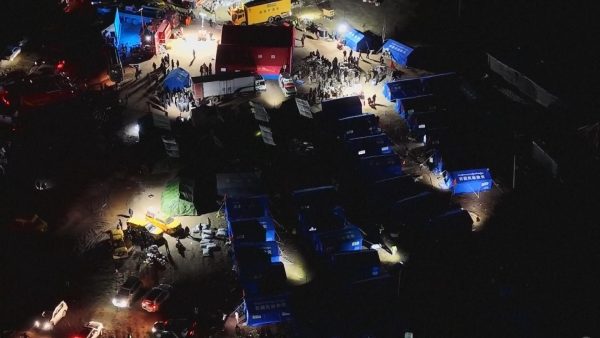
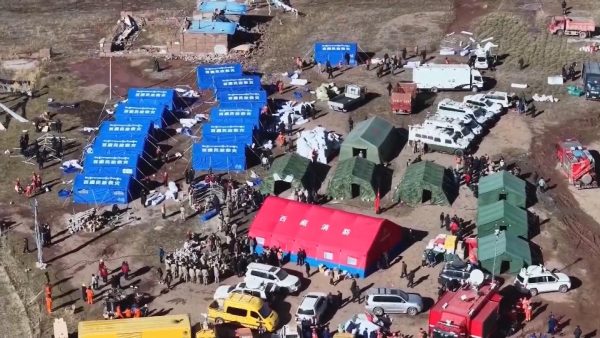
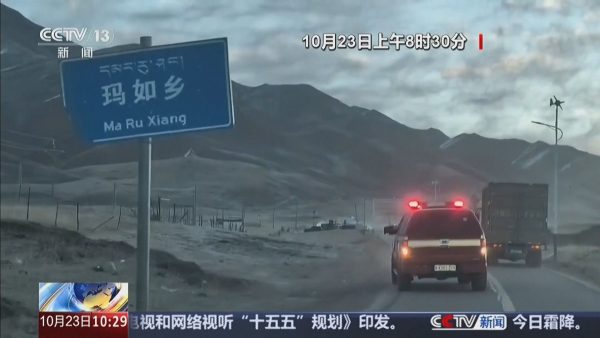
Powerful quake kills at least 16 in Xizang region


熱門新聞


條款及細則
條款及細則
隨時隨地觀看新聞,立即下載

'%3e%3cpath%20id='路径_2'%20data-name='路径%202'%20d='M579.91,145.916a42.433,42.433,0,1,0,42.528,42.433,41.772,41.772,0,0,0-42.528-42.433m0,68.138a25.8,25.8,0,1,1,23.91-25.705,24.572,24.572,0,0,1-23.91,25.705m-92.9-68.138a42.433,42.433,0,1,0,42.528,42.433,41.772,41.772,0,0,0-42.528-42.433m0,68.138a25.8,25.8,0,1,1,23.911-25.705,24.572,24.572,0,0,1-23.911,25.705m-110.38-55.1v17.956h42.621A37.793,37.793,0,0,1,409.8,199.6a44.037,44.037,0,0,1-33.266,13.135,47.914,47.914,0,0,1,0-95.734,45.836,45.836,0,0,1,32.415,12.854l12.664-12.664a62.75,62.75,0,0,0-45.174-18.144,66.153,66.153,0,1,0,0,131.739,60.2,60.2,0,0,0,45.93-18.9A59.452,59.452,0,0,0,438.154,170.2a58.644,58.644,0,0,0-.946-11.246Zm451.638,14.364a39.409,39.409,0,0,0-36.291-26.933A40.259,40.259,0,0,0,752,188.822a41.49,41.49,0,0,0,42.055,42.432,42.148,42.148,0,0,0,35.344-18.9l-14.459-9.45a24.193,24.193,0,0,1-20.885,11.718,21.546,21.546,0,0,1-20.6-12.852l56.7-23.436ZM770.431,187.5a23.249,23.249,0,0,1,22.21-24.76,16.441,16.441,0,0,1,15.781,9.45Zm-46.023,40.637h18.9V103.577h-18.9Zm-30.525-72.77h-.568a29.385,29.385,0,0,0-22.3-9.449,42.526,42.526,0,0,0,0,85.053,28.908,28.908,0,0,0,22.3-9.449h.663v6.142c0,16.256-8.7,24.854-22.681,24.854a23.431,23.431,0,0,1-21.358-15.12l-16.255,6.71a40.446,40.446,0,0,0,37.8,25.044c21.829,0,40.354-12.853,40.354-44.134V148.468H693.883Zm-21.359,58.594A24.381,24.381,0,0,1,648.9,188.443a24.57,24.57,0,0,1,23.625-25.894,23.909,23.909,0,0,1,22.682,25.894,23.722,23.722,0,0,1-22.682,25.611ZM915.592,103.484H870.985V228.135h18.9V180.883h25.988a38.747,38.747,0,1,0,0-77.4Zm.471,60.1H889.6V120.872h26.461a21.358,21.358,0,1,1,0,42.715m115.012-17.861a34.97,34.97,0,0,0-33.171,18.9l16.539,6.9a17.583,17.583,0,0,1,17.01-9.452,17.958,17.958,0,0,1,19.564,16.066v1.324a41.193,41.193,0,0,0-19.373-4.819c-17.767,0-35.913,9.449-35.913,28.35a28.352,28.352,0,0,0,30.9,27.407,26.277,26.277,0,0,0,23.722-12.191h.661v9.45h17.956v-47.44c-.095-22.115-16.539-34.5-37.9-34.5m-2.268,68.328c-6.047,0-14.552-3.024-14.552-10.585,0-9.45,10.583-13.325,19.751-13.325a33.169,33.169,0,0,1,17.011,4.159,22.588,22.588,0,0,1-22.21,19.751m105.468-65.586-21.357,54.057h-.663l-22.02-54.057H1070.2l33.172,75.6-18.9,42.054h19.374l51.128-117.563ZM966.718,228.135h18.9V103.577h-18.9Zm-840.431-101.5L4.377,4.631A20.131,20.131,0,0,0,.029,18.24V238.72a21.079,21.079,0,0,0,3.4,12.569Zm4.064-3.876,37.8-37.8L25.356,3.214A18.9,18.9,0,0,0,8.912.945Zm89.4-8.695L172.5,87.417l-38.652,39.221,41.3,41.3L219.28,142.8c14.46-7.844,14.46-20.791.472-28.73m-89.4,16.539L7.495,254.974a17.768,17.768,0,0,0,17.768-1.607l144.686-82.219h.566Z'%20fill='%23fff'/%3e%3c/g%3e%3c/svg%3e)


Copyright 2026 TVB Limited