

- 简
- 繁
- En


AI and a Code of Ethics|Behind the Wig
發佈: 2026-04-20 07:00
撰文: 大律師 / Barristers


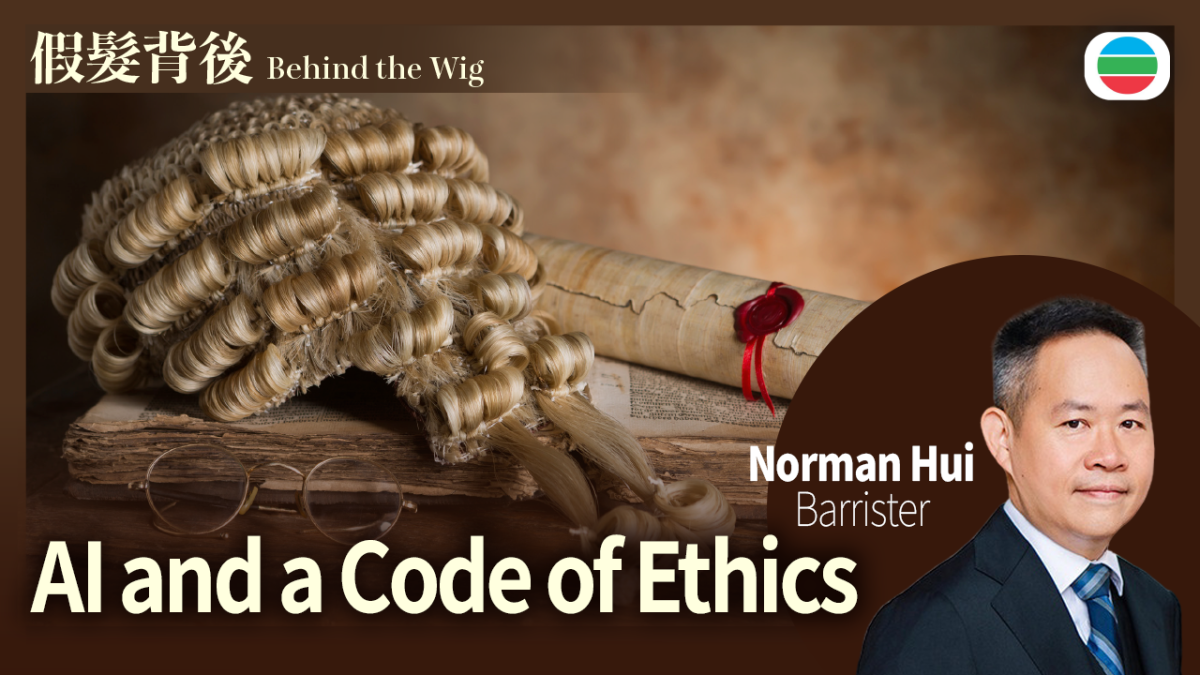
Norman Hui
Barrister
Principal Lecturer HKU
Across different professions and time, a truth has remained constant: a code of ethics is not decorative. It is the instrument that our society relies upon to restrain power, preserves trust, and defines what it means to belong to a profession. The most influential ethical codes have emerged not in times of calm, but in moments when public trust was shaken and specialised knowledge threatened to outpace societal safeguards. Ethical codes are what elevate a profession above mere occupation, it is what assures the public that expertise will be exercised responsibly and make those professionally accountable recognised for their actions.
The most enduring example is the Hippocratic Oath that dates to around 400 BC, imposing moral boundaries on doctors at a time when medical knowledge could easily be weaponised. The core elements of beneficence, principles of not harming the patient, confidentiality, humility, accountability are still principles that shape modern professional ethics. The Hippocratic Oath’s power lies in its clarity: specialised competence demands ethical responsibility, and professional judgment cannot exist without moral restraint.
A code of ethics needs in its design a clear purpose, core duties, recognition of limits, and an overriding obligation to the public but one that is adaptable. This explains why contemporary professional codes continue to echo ancient principles but they are continuously translated into modern regulatory language.
Hong Kong’s legal profession stands firmly within this tradition. The Law Society of Hong Kong’s Principles of Professional Conduct require solicitors to uphold the Basic Law, honour the rule of law, maintain independence and integrity, act in their clients’ best interests, protect the profession’s reputation, meet proper standards of work, and of course fulfilling their duty to the court. These obligations apply regardless of the tools or technologies a solicitor uses.
The Hong Kong Bar Association’s Code of Conduct of the Hong Kong Bar (“Bar Code”) reinforces the same ethos. As specialist litigators, the Bar Code stresses that the administration of justice depends on barristers maintaining the highest ethical standards. Its reach is far and applies universally since the Bar Code applies even when a barrister is not in active practice or is working outside Hong Kong and it explicitly acknowledges that no written code can ever be exhaustive. Ethical responsibility ultimately rests on professional judgment.

Artificial intelligence (“AI”) now presents the kind of challenge that disruptive technology prompts the need to create clear frameworks that also maintain traditionally held views on ethical behaviour for legal professionals. Hong Kong currently regulates AI through guidance issued by the Office of the Privacy Commissioner for Personal Data and the Digital Policy Office, rather than through a dedicated statute whereas inroads are being made in the US, UK and Australia. These existing general frameworks in Hong Kong emphasise accountability, human oversight, transparency, data protection, and risk mitigation but offer limited clarity on liability for negligent design, misuse, or over‑reliance on AI systems.
For the legal profession, this creates a structural gap. Lawyers increasingly depend on AI for research, drafting, analysis, and decision support, yet their core duties must remain immovable and accountable. The principles relating to a legal professional’s competence, independence, confidentiality, and certainly duty to the court remain non‑delegable. As AI systems grow more autonomous and opaque, particularly with the rise of Agentic AI which acts independently, the risk is not only in technical errors due to delegation but ethical drift, where professional judgment is quietly displaced by automation without clear standards governing its use.
The same historical logic that produced the Hippocratic Oath and modern professional codes now points to an unavoidable conclusion: Hong Kong’s legal profession needs a standalone code of ethics for Artificial Intelligence. Despite there are two branches of the legal profession, both sets of AI codes of ethics would universally make practitioners from both branches of the legal profession accountable to the court and the public. For barristers specifically, such an AI code of ethics will give guidance on the extent of how, when and where AI may be used in practice, particularly in the daily activities of a practitioner who may be using Generative AI, this is a tool requiring human oversight, the risks involved in using AI and maintaining competence, to avoid hallucinations that may create fake citations or incorrectly explain authorities while submitting to the court.
As society moves towards an exciting but uncertain and more technologically reliant future, there is no fate but what the profession makes for itself. Barristers must stay sharp, honour their core ethical duties, and keep a tight control over AI, because the integrity of the law in Hong Kong survives only if we stay vigilant and adaptable.
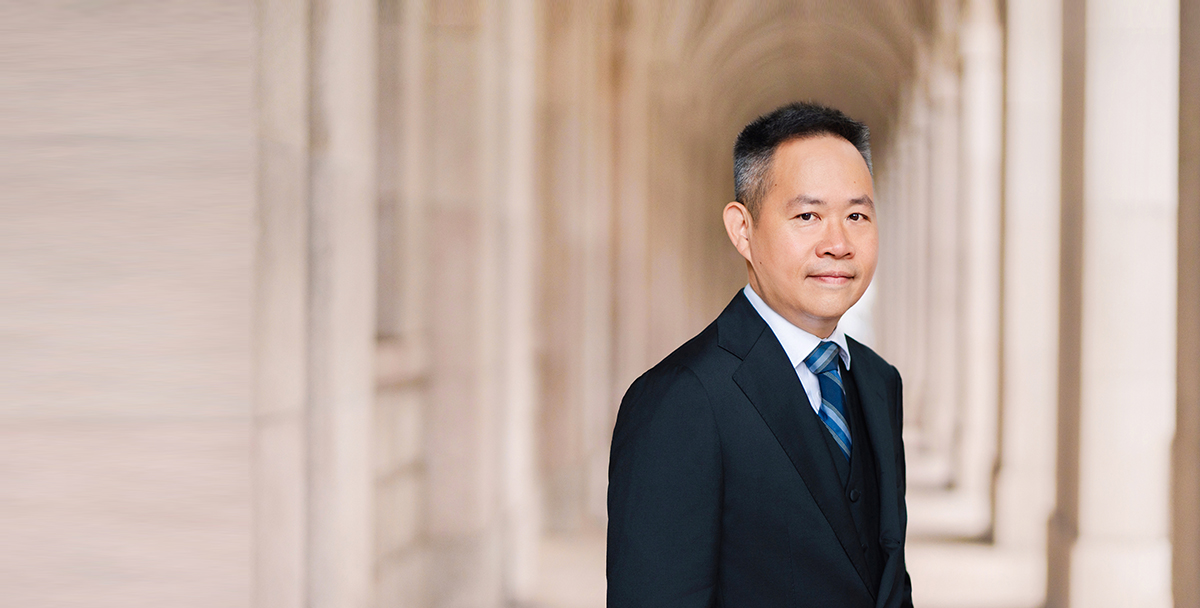
Mr. Norman Hui is Chairman of the Artificial Intelligence and Ethics Committee, Co-Chairman of the Pro Bono Affairs Committee, Member of the Intellectual Property Committee, Personal Injuries Committee and Continuing Education Committee of the Hong Kong Bar Association. His private practice and teaching at the University of Hong Kong are in the same or similar areas of litigation.
Behind the Wig is a weekly legal column written by practicing barristers specialising in criminal, civil, and commercial law. Drawing on their legal expertise and practical experience, or sharing their observations and insights as barristers, they analyse social issues, encourage readers to interpret everyday matters through a legal mindset, and promote the spirit of the rule of law.
The views expressed in this article are the author’s own and do not reflect TVB’s editorial stance.
更多新聞
熱門新聞


條款及細則
條款及細則
隨時隨地觀看新聞,立即下載

'%3e%3cpath%20id='路径_2'%20data-name='路径%202'%20d='M579.91,145.916a42.433,42.433,0,1,0,42.528,42.433,41.772,41.772,0,0,0-42.528-42.433m0,68.138a25.8,25.8,0,1,1,23.91-25.705,24.572,24.572,0,0,1-23.91,25.705m-92.9-68.138a42.433,42.433,0,1,0,42.528,42.433,41.772,41.772,0,0,0-42.528-42.433m0,68.138a25.8,25.8,0,1,1,23.911-25.705,24.572,24.572,0,0,1-23.911,25.705m-110.38-55.1v17.956h42.621A37.793,37.793,0,0,1,409.8,199.6a44.037,44.037,0,0,1-33.266,13.135,47.914,47.914,0,0,1,0-95.734,45.836,45.836,0,0,1,32.415,12.854l12.664-12.664a62.75,62.75,0,0,0-45.174-18.144,66.153,66.153,0,1,0,0,131.739,60.2,60.2,0,0,0,45.93-18.9A59.452,59.452,0,0,0,438.154,170.2a58.644,58.644,0,0,0-.946-11.246Zm451.638,14.364a39.409,39.409,0,0,0-36.291-26.933A40.259,40.259,0,0,0,752,188.822a41.49,41.49,0,0,0,42.055,42.432,42.148,42.148,0,0,0,35.344-18.9l-14.459-9.45a24.193,24.193,0,0,1-20.885,11.718,21.546,21.546,0,0,1-20.6-12.852l56.7-23.436ZM770.431,187.5a23.249,23.249,0,0,1,22.21-24.76,16.441,16.441,0,0,1,15.781,9.45Zm-46.023,40.637h18.9V103.577h-18.9Zm-30.525-72.77h-.568a29.385,29.385,0,0,0-22.3-9.449,42.526,42.526,0,0,0,0,85.053,28.908,28.908,0,0,0,22.3-9.449h.663v6.142c0,16.256-8.7,24.854-22.681,24.854a23.431,23.431,0,0,1-21.358-15.12l-16.255,6.71a40.446,40.446,0,0,0,37.8,25.044c21.829,0,40.354-12.853,40.354-44.134V148.468H693.883Zm-21.359,58.594A24.381,24.381,0,0,1,648.9,188.443a24.57,24.57,0,0,1,23.625-25.894,23.909,23.909,0,0,1,22.682,25.894,23.722,23.722,0,0,1-22.682,25.611ZM915.592,103.484H870.985V228.135h18.9V180.883h25.988a38.747,38.747,0,1,0,0-77.4Zm.471,60.1H889.6V120.872h26.461a21.358,21.358,0,1,1,0,42.715m115.012-17.861a34.97,34.97,0,0,0-33.171,18.9l16.539,6.9a17.583,17.583,0,0,1,17.01-9.452,17.958,17.958,0,0,1,19.564,16.066v1.324a41.193,41.193,0,0,0-19.373-4.819c-17.767,0-35.913,9.449-35.913,28.35a28.352,28.352,0,0,0,30.9,27.407,26.277,26.277,0,0,0,23.722-12.191h.661v9.45h17.956v-47.44c-.095-22.115-16.539-34.5-37.9-34.5m-2.268,68.328c-6.047,0-14.552-3.024-14.552-10.585,0-9.45,10.583-13.325,19.751-13.325a33.169,33.169,0,0,1,17.011,4.159,22.588,22.588,0,0,1-22.21,19.751m105.468-65.586-21.357,54.057h-.663l-22.02-54.057H1070.2l33.172,75.6-18.9,42.054h19.374l51.128-117.563ZM966.718,228.135h18.9V103.577h-18.9Zm-840.431-101.5L4.377,4.631A20.131,20.131,0,0,0,.029,18.24V238.72a21.079,21.079,0,0,0,3.4,12.569Zm4.064-3.876,37.8-37.8L25.356,3.214A18.9,18.9,0,0,0,8.912.945Zm89.4-8.695L172.5,87.417l-38.652,39.221,41.3,41.3L219.28,142.8c14.46-7.844,14.46-20.791.472-28.73m-89.4,16.539L7.495,254.974a17.768,17.768,0,0,0,17.768-1.607l144.686-82.219h.566Z'%20fill='%23fff'/%3e%3c/g%3e%3c/svg%3e)


Copyright 2026 TVB Limited