
简

- 简
- 繁
- En


Brexit: what has changed in 10 years?
News
发布: 2026-06-21 14:13
撰文: 無綫新聞


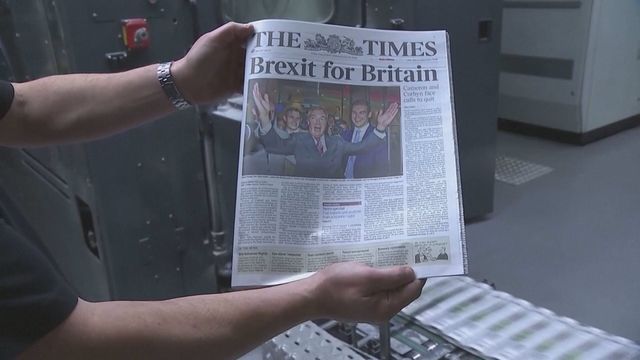
Ten years ago, the UK's seismic vote to break up with the European Union caused a rift across the country that forges political identities to this day, and shattered a half-century project to get closer to the continent.
Brexit, short for British exit, became a reality on June 23, 2016 when more than 17 million people - or 52% of the total votes cast in the referendum - opted for leaving the bloc. It was a narrow margin that led to the most dramatic shake-up of the UK economy and society since World War II.
Brexit supporters - or Brexiters as they became known - tapped into deep frustration with the EU and argued that the United Kingdom would be better off unshackled from it and regaining an array of powers to be used solely for domestic priorities.
Opponents warned that Brexit would lead to economic disruption and risked the country's standing in the world.
Brexiters held out a vision that the British economy post-Brexit could thrive by harnessing the buccaneering spirit that had once made it the world's biggest.
Though the COVID-19 pandemic and the wars in Ukraine and Iran haven't helped, that vision still hasn't become reality.
What came instead were difficulties involved in trading with European neighbors - the 27-nation EU remains by far the UK's biggest trading partner.
Though there are no tariffs imposed on British goods entering the EU, there is a raft of non-tariff barriers, such as laborious customs paperwork, border certifications, and visa restrictions. Many of the trade deals that the Brexiters touted - including one with the United States - have not materialized.
Brexiters argue, however, that leaving the EU is a long-term endeavor, while conceding that Brexit always involved a trade-off - a short-term economic disruption in return for greater control over an array of policy levers, including on migration.
Brexit put an end to free movement between the UK and EU, but securing Britain's border has had mixed outcomes.
Reining in immigration was a key Brexiters' promise, their message about taking back control resonated.
Though net migration, the difference between those entering the UK and those leaving in any one year, from Europe has plunged, it has soared from non-EU countries.
That's partly because of changes in visa rules that the previous Conservative government introduced to help out sectors that needed workers, such as in caring for the elderly.
But what irked many was the sight of migrants, often escaping war zones such as Afghanistan and Sudan, arriving on British shores in inflatable boats after making the dangerous journey across the English Channel.
Meanwhile net migration, which peaked at more than 900,000 in 2023 has fallen sharply to 171,000 last year.
Brexit, short for British exit, became a reality on June 23, 2016 when more than 17 million people - or 52% of the total votes cast in the referendum - opted for leaving the bloc. It was a narrow margin that led to the most dramatic shake-up of the UK economy and society since World War II.
Brexit supporters - or Brexiters as they became known - tapped into deep frustration with the EU and argued that the United Kingdom would be better off unshackled from it and regaining an array of powers to be used solely for domestic priorities.
Opponents warned that Brexit would lead to economic disruption and risked the country's standing in the world.
Brexiters held out a vision that the British economy post-Brexit could thrive by harnessing the buccaneering spirit that had once made it the world's biggest.
Though the COVID-19 pandemic and the wars in Ukraine and Iran haven't helped, that vision still hasn't become reality.
What came instead were difficulties involved in trading with European neighbors - the 27-nation EU remains by far the UK's biggest trading partner.
Though there are no tariffs imposed on British goods entering the EU, there is a raft of non-tariff barriers, such as laborious customs paperwork, border certifications, and visa restrictions. Many of the trade deals that the Brexiters touted - including one with the United States - have not materialized.
Brexiters argue, however, that leaving the EU is a long-term endeavor, while conceding that Brexit always involved a trade-off - a short-term economic disruption in return for greater control over an array of policy levers, including on migration.
Brexit put an end to free movement between the UK and EU, but securing Britain's border has had mixed outcomes.
Reining in immigration was a key Brexiters' promise, their message about taking back control resonated.
Though net migration, the difference between those entering the UK and those leaving in any one year, from Europe has plunged, it has soared from non-EU countries.
That's partly because of changes in visa rules that the previous Conservative government introduced to help out sectors that needed workers, such as in caring for the elderly.
But what irked many was the sight of migrants, often escaping war zones such as Afghanistan and Sudan, arriving on British shores in inflatable boats after making the dangerous journey across the English Channel.
Meanwhile net migration, which peaked at more than 900,000 in 2023 has fallen sharply to 171,000 last year.
更多新闻
影片
Peak return day as Lunar New Year holidays wrap up
News2026-02-22

影片
Global news highlights by AP
News2026-02-18
影片
Global news highlights by AP
News2026-02-13
热门新闻


条款及细则
条款及细则
随时随地观看新闻,立即下载

'%3e%3cpath%20id='路径_2'%20data-name='路径%202'%20d='M579.91,145.916a42.433,42.433,0,1,0,42.528,42.433,41.772,41.772,0,0,0-42.528-42.433m0,68.138a25.8,25.8,0,1,1,23.91-25.705,24.572,24.572,0,0,1-23.91,25.705m-92.9-68.138a42.433,42.433,0,1,0,42.528,42.433,41.772,41.772,0,0,0-42.528-42.433m0,68.138a25.8,25.8,0,1,1,23.911-25.705,24.572,24.572,0,0,1-23.911,25.705m-110.38-55.1v17.956h42.621A37.793,37.793,0,0,1,409.8,199.6a44.037,44.037,0,0,1-33.266,13.135,47.914,47.914,0,0,1,0-95.734,45.836,45.836,0,0,1,32.415,12.854l12.664-12.664a62.75,62.75,0,0,0-45.174-18.144,66.153,66.153,0,1,0,0,131.739,60.2,60.2,0,0,0,45.93-18.9A59.452,59.452,0,0,0,438.154,170.2a58.644,58.644,0,0,0-.946-11.246Zm451.638,14.364a39.409,39.409,0,0,0-36.291-26.933A40.259,40.259,0,0,0,752,188.822a41.49,41.49,0,0,0,42.055,42.432,42.148,42.148,0,0,0,35.344-18.9l-14.459-9.45a24.193,24.193,0,0,1-20.885,11.718,21.546,21.546,0,0,1-20.6-12.852l56.7-23.436ZM770.431,187.5a23.249,23.249,0,0,1,22.21-24.76,16.441,16.441,0,0,1,15.781,9.45Zm-46.023,40.637h18.9V103.577h-18.9Zm-30.525-72.77h-.568a29.385,29.385,0,0,0-22.3-9.449,42.526,42.526,0,0,0,0,85.053,28.908,28.908,0,0,0,22.3-9.449h.663v6.142c0,16.256-8.7,24.854-22.681,24.854a23.431,23.431,0,0,1-21.358-15.12l-16.255,6.71a40.446,40.446,0,0,0,37.8,25.044c21.829,0,40.354-12.853,40.354-44.134V148.468H693.883Zm-21.359,58.594A24.381,24.381,0,0,1,648.9,188.443a24.57,24.57,0,0,1,23.625-25.894,23.909,23.909,0,0,1,22.682,25.894,23.722,23.722,0,0,1-22.682,25.611ZM915.592,103.484H870.985V228.135h18.9V180.883h25.988a38.747,38.747,0,1,0,0-77.4Zm.471,60.1H889.6V120.872h26.461a21.358,21.358,0,1,1,0,42.715m115.012-17.861a34.97,34.97,0,0,0-33.171,18.9l16.539,6.9a17.583,17.583,0,0,1,17.01-9.452,17.958,17.958,0,0,1,19.564,16.066v1.324a41.193,41.193,0,0,0-19.373-4.819c-17.767,0-35.913,9.449-35.913,28.35a28.352,28.352,0,0,0,30.9,27.407,26.277,26.277,0,0,0,23.722-12.191h.661v9.45h17.956v-47.44c-.095-22.115-16.539-34.5-37.9-34.5m-2.268,68.328c-6.047,0-14.552-3.024-14.552-10.585,0-9.45,10.583-13.325,19.751-13.325a33.169,33.169,0,0,1,17.011,4.159,22.588,22.588,0,0,1-22.21,19.751m105.468-65.586-21.357,54.057h-.663l-22.02-54.057H1070.2l33.172,75.6-18.9,42.054h19.374l51.128-117.563ZM966.718,228.135h18.9V103.577h-18.9Zm-840.431-101.5L4.377,4.631A20.131,20.131,0,0,0,.029,18.24V238.72a21.079,21.079,0,0,0,3.4,12.569Zm4.064-3.876,37.8-37.8L25.356,3.214A18.9,18.9,0,0,0,8.912.945Zm89.4-8.695L172.5,87.417l-38.652,39.221,41.3,41.3L219.28,142.8c14.46-7.844,14.46-20.791.472-28.73m-89.4,16.539L7.495,254.974a17.768,17.768,0,0,0,17.768-1.607l144.686-82.219h.566Z'%20fill='%23fff'/%3e%3c/g%3e%3c/svg%3e)


Copyright 2026 TVB Limited