

- 简
- 繁
- En


Arbitration Sustainability and Human Arbitrators | Behind the Wig
发布: 2026-05-11 07:00
撰文: 大律師 / Barristers


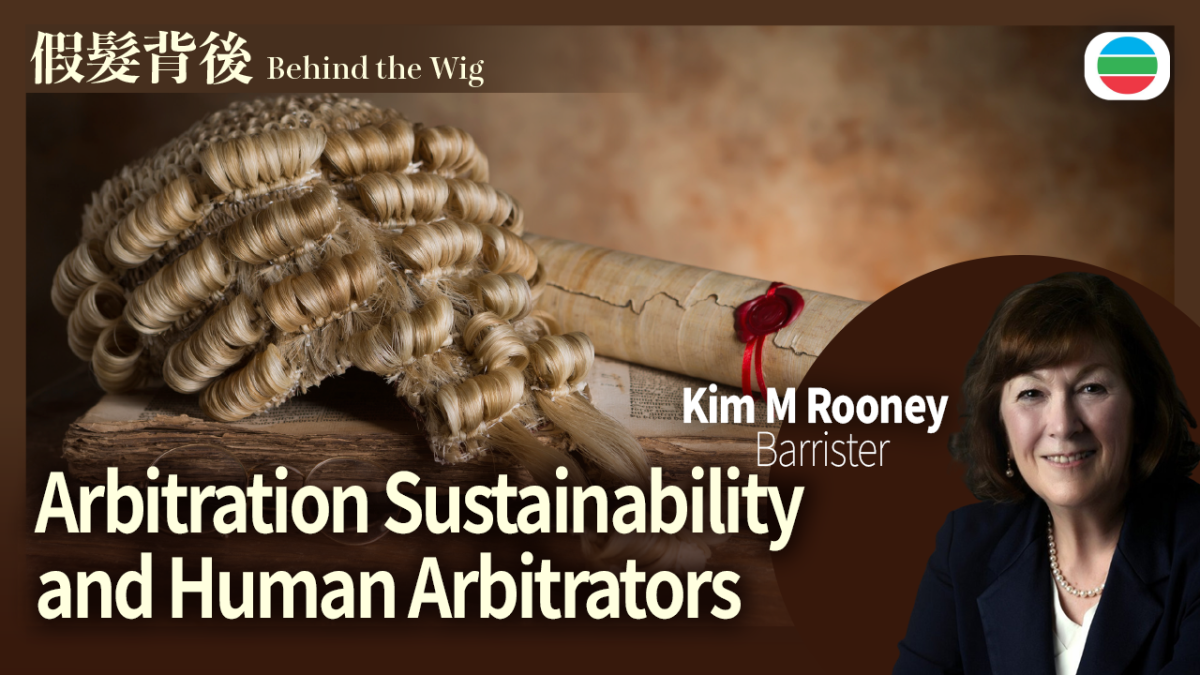
Kim M Rooney
Barrister
Arbitration is truly an international form of dispute resolution, as illustrated by the gathering in early April 2026 of around 1,300 arbitration practitioners (including from Hong Kong, mainland China and other parts of Asia) at the ICCA Madrid conference in Spain who discussed aspects of “Whether international arbitration is Local, Global or Both?”
Spain’s history over millennia of different cultures and peoples converging on it, and its relationship with Central and South American nations, added to the warm and lively atmosphere of the ICCA Madrid conference. The participants’ discussions included “green arbitration” and how arbitration may be made more sustainable, as well as the impact of Artificial Intelligence (AI) and other innovative technology.
Hong Kong is a leading global centre for international arbitration, a private form of dispute resolution, most commonly agreed between parties to a commercial contract (broadly defined). Hong Kong Barristers are increasingly practicing as arbitrators (similar to private judges), advocates, experts and policy makers in arbitration. It can provide access to justice, contribute to the rule of law and to the peaceful resolution of issues.
International arbitration involves both the laws of specific jurisdictions/nations and international law and practice. The New York Convention (a treaty) allows for the final decisions of arbitrators in international arbitrations (called “awards”) to be enforced in most countries around the world—this applies in Hong Kong. However, international arbitration is often expensive, in part because of the financial, economic and technical resources needed for preparation and presentation of cases and in person hearings.
International arbitration is becoming more complex, with a greater diversity of participants from all around the world, demands for sustainability related to finite resources and the rapid development in digital technology including AI, being among the factors contributing to this.
For disputes involving the environment, statistics suggest that many ESG (Environmental, Social and Governance) related disputes are being managed through arbitration, such as engineering, construction and energy disputes which often involve renewable energy projects, environmental protection and human rights.
Also, as mentioned earlier, arbitration requires the use of financial, economic and technical resources, among other resources. A Carbon Impact Calculator was launched at the ICCA Madrid conference by a group (Campaign for Greener Arbitrations) to give arbitration practitioners the tools to identify and qualify carbon emissions across all stages of arbitration proceedings, including energy consumption and as to other emissions. This calculator includes assumptions as “to purchased electricity for computer use, printing and emails, as well as travel, hotel stays, computer manufacturing, data storage and material use.”
This Carbon Impact Calculator should assist Barristers in their arbitration work (together with other arbitration stakeholders) to think about the hidden as well as obvious costs of international arbitration, and how best to manage them.
Arbitration tools using AI are already being developed, including for arbitrator selection, research and case management, and as aids to decision making. As the capacity of AI grows exponentially, one issue now being discussed is its status—whether it is, and should continue to be, a tool for humans, or whether it may become a partner of humans. For example, to date arbitrators have been human. Some advocate that this may, and should, change as AI and digital technology develops, and that AI may now be used for some final decisions, in place of humans, to increase access to justice and reduce costs.
The potential risks and rewards of AI and other digital technology raise profound ethical and regulatory issues for arbitration with which arbitration practitioners, courts and arbitral institutions, bar associations and legislators are now engaging. Already, some jurisdictions have passed laws/made directions that require that judicial and quasi-judicial functions such as those of arbitrators must be fulfilled by humans, for example the European Union by its Artificial Intelligence Act and China, including by guidelines of the Supreme People’s Court.
Of course, this discussion by the arbitration community is a small part of a much wider discussion in Hong Kong and around the world about the rewards and risks of AI and innovative digital technology generally and how best to maximize their benefits for humans while retaining control and ensuring that such benefits are available to all in a safe, secure, and confidential way.
Ms. Kim M Rooney is a Council Member of the Hong Kong Bar Association (“HKBA”). She also chairs the HKBA’s Arbitration Committee and is a Member of its Construction Law Committee and Standing Committee on AI and Ethics. She practises as an international arbitrator and barrister focusing on arbitration in the aviation, commercial, construction, energy, finance (including cryptocurrency), infrastructure, information, communications and technology, IPR, and investment sectors.

Behind the Wig is a weekly legal column written by practicing barristers specialising in criminal, civil, and commercial law. Drawing on their legal expertise and practical experience, or sharing their observations and insights as barristers, they analyse social issues, encourage readers to interpret everyday matters through a legal mindset, and promote the spirit of the rule of law.
The views expressed in this article are the author’s own and do not reflect TVB’s editorial stance.
更多新闻
热门新闻


条款及细则
条款及细则
随时随地观看新闻,立即下载

'%3e%3cpath%20id='路径_2'%20data-name='路径%202'%20d='M579.91,145.916a42.433,42.433,0,1,0,42.528,42.433,41.772,41.772,0,0,0-42.528-42.433m0,68.138a25.8,25.8,0,1,1,23.91-25.705,24.572,24.572,0,0,1-23.91,25.705m-92.9-68.138a42.433,42.433,0,1,0,42.528,42.433,41.772,41.772,0,0,0-42.528-42.433m0,68.138a25.8,25.8,0,1,1,23.911-25.705,24.572,24.572,0,0,1-23.911,25.705m-110.38-55.1v17.956h42.621A37.793,37.793,0,0,1,409.8,199.6a44.037,44.037,0,0,1-33.266,13.135,47.914,47.914,0,0,1,0-95.734,45.836,45.836,0,0,1,32.415,12.854l12.664-12.664a62.75,62.75,0,0,0-45.174-18.144,66.153,66.153,0,1,0,0,131.739,60.2,60.2,0,0,0,45.93-18.9A59.452,59.452,0,0,0,438.154,170.2a58.644,58.644,0,0,0-.946-11.246Zm451.638,14.364a39.409,39.409,0,0,0-36.291-26.933A40.259,40.259,0,0,0,752,188.822a41.49,41.49,0,0,0,42.055,42.432,42.148,42.148,0,0,0,35.344-18.9l-14.459-9.45a24.193,24.193,0,0,1-20.885,11.718,21.546,21.546,0,0,1-20.6-12.852l56.7-23.436ZM770.431,187.5a23.249,23.249,0,0,1,22.21-24.76,16.441,16.441,0,0,1,15.781,9.45Zm-46.023,40.637h18.9V103.577h-18.9Zm-30.525-72.77h-.568a29.385,29.385,0,0,0-22.3-9.449,42.526,42.526,0,0,0,0,85.053,28.908,28.908,0,0,0,22.3-9.449h.663v6.142c0,16.256-8.7,24.854-22.681,24.854a23.431,23.431,0,0,1-21.358-15.12l-16.255,6.71a40.446,40.446,0,0,0,37.8,25.044c21.829,0,40.354-12.853,40.354-44.134V148.468H693.883Zm-21.359,58.594A24.381,24.381,0,0,1,648.9,188.443a24.57,24.57,0,0,1,23.625-25.894,23.909,23.909,0,0,1,22.682,25.894,23.722,23.722,0,0,1-22.682,25.611ZM915.592,103.484H870.985V228.135h18.9V180.883h25.988a38.747,38.747,0,1,0,0-77.4Zm.471,60.1H889.6V120.872h26.461a21.358,21.358,0,1,1,0,42.715m115.012-17.861a34.97,34.97,0,0,0-33.171,18.9l16.539,6.9a17.583,17.583,0,0,1,17.01-9.452,17.958,17.958,0,0,1,19.564,16.066v1.324a41.193,41.193,0,0,0-19.373-4.819c-17.767,0-35.913,9.449-35.913,28.35a28.352,28.352,0,0,0,30.9,27.407,26.277,26.277,0,0,0,23.722-12.191h.661v9.45h17.956v-47.44c-.095-22.115-16.539-34.5-37.9-34.5m-2.268,68.328c-6.047,0-14.552-3.024-14.552-10.585,0-9.45,10.583-13.325,19.751-13.325a33.169,33.169,0,0,1,17.011,4.159,22.588,22.588,0,0,1-22.21,19.751m105.468-65.586-21.357,54.057h-.663l-22.02-54.057H1070.2l33.172,75.6-18.9,42.054h19.374l51.128-117.563ZM966.718,228.135h18.9V103.577h-18.9Zm-840.431-101.5L4.377,4.631A20.131,20.131,0,0,0,.029,18.24V238.72a21.079,21.079,0,0,0,3.4,12.569Zm4.064-3.876,37.8-37.8L25.356,3.214A18.9,18.9,0,0,0,8.912.945Zm89.4-8.695L172.5,87.417l-38.652,39.221,41.3,41.3L219.28,142.8c14.46-7.844,14.46-20.791.472-28.73m-89.4,16.539L7.495,254.974a17.768,17.768,0,0,0,17.768-1.607l144.686-82.219h.566Z'%20fill='%23fff'/%3e%3c/g%3e%3c/svg%3e)


Copyright 2026 TVB Limited