


Premier Li Qiang touts trade ties during address at China-ASEAN Summit
publish: 2026-11-16 21:02
By: 無綫新聞


Premier Li Qiang has returned to Beijing after co-chairing the China-ASEAN Summit held in Manila, the Philippines.
Li says in his opening remarks that China and the Association of Southeast Asian Nations have long been supporters of economic globalisation and regional integration. He indicates in today's turbulent world, they must stand united to ward off interference and explore new economic frontiers, expressing Beijing's commitment to free trade.
Premier Li Qiang was in the Philippine capital to join Southeast Asian leaders who opened their annual summit on Sunday.
The 11-nation bloc with a combined population of nearly 694 million comprises Indonesia, Malaysia, the Philippines, Singapore, Thailand, Brunei, Vietnam, Laos, Myanmar, Cambodia and Timor-Leste.
The first day of the meetings ended without completing a protracted code of conduct for the South China Sea where Beijing and Manila have overlapping claims.
During the 29th China-ASEAN Summit on Monday, Philippine President Ferdinand Marcos, Jr., the rotating chair of ASEAN, urges self-restraint, mutual respect and practical cooperation as they mark the 50th anniversary of the Treaty of Amity and Cooperation.
He says, "Our shared commitment to international law and the peaceful settlement of disputes must be reflected in our actions, including through self-restraint, mutual respect, and practical cooperation. Even amid regional and global uncertainties, ASEAN and China continue to find common ground and pursue tangible cooperation."
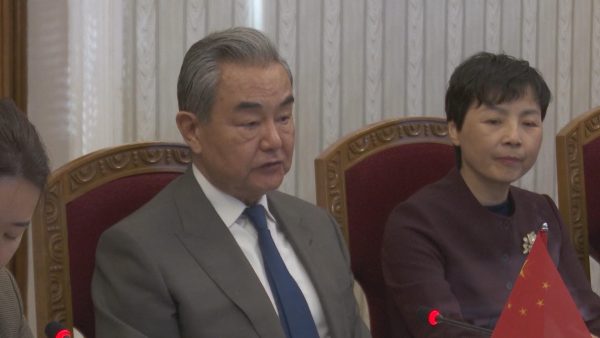
Li, for his part, says China looks forward to the early conclusion of the code of conduct which will provide a solid institutional guarantee for lasting peace and stability, while calling on the two sides to properly handle differences through dialogue and consultation and jointly opposing external interference.
He also touts the 1-trillion-US-dollar trade ties with the bloc in 2025 and more than 500 billion dollars of cumulative two-way investment.
China has remained ASEAN's largest trading partner for 17 consecutive years and a key source of investment.
At a time of growing unilateralism and protectionism and recurring geopolitical conflict, their economic relations have only strengthened, according to Li.
The premier says both sides have "firmly committed to upholding multilateralism, promoting free trade and endeavour to make the pie bigger," further emphsising the necessity to enhance their innovation capabilities.
In the digital domain, Li says China is willing to forge ahead "AI plus" collaboration with ASEAN and ensure the success of the Year of AI cooperation in 2027.
Regional leaders have expressed readiness to implement the China-ASEAN Free Trade Area 3.0 Upgrade Protocol and join hands in areas of economy and trade, connectivity, clean energy, and combating transnational crime.
More News




Trending News


Terms and Conditions
Terms and Conditions
Watch news anytime, anywhere. Download now.


Copyright 2026 TVB Limited