


American man flew to Shenzhen for China-developed CAR-T-cell therapy
publish: 2026-11-11 23:48
By: 無綫新聞


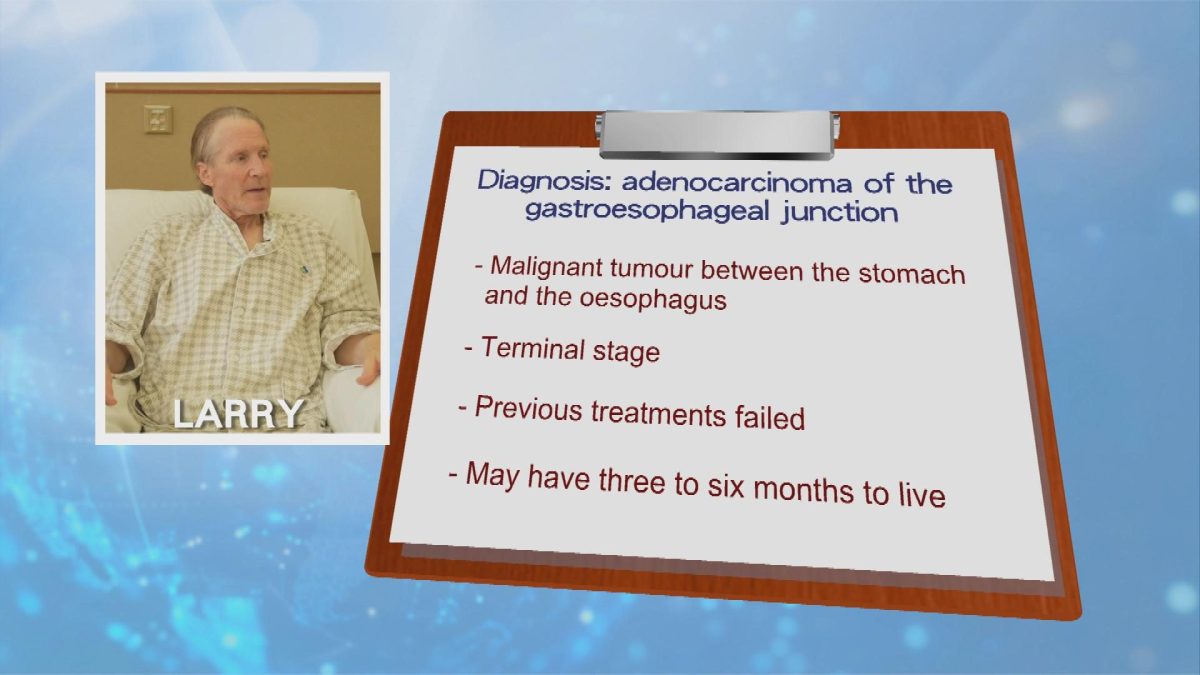
A 66-year-old American man with terminal cancer of the gastroesophageal junction, has travelled from Los Angeles to Shenzhen for a China-developed CAR-T-cell therapy, reportedly the first of its kind and approved only in the mainland.
Larry from Los Angeles may not have felt this relaxed in a long time.
He had adenocarcinoma of the gastroesophageal junction, a malignant tumour between the stomach and the oesophagus, and had reached the terminal stage.
Previous treatments had failed, and doctors said he may have only about three to six months to live.
His wife found that China had developed a CAR-T-cell therapy for gastric cancer.
It is described as a world-first, but it has only been approved for use in mainland China.
So he travelled a long way to Shenzhen to try his luck.
Larry's attending doctor Pan Hong Ming said they had to examine his physical condition, checking his heart, liver and lung functions, to judge whether he is suitable for the treatment.
In his case, they are in very good condition.
CAR-T-cell therapy has been in use since 2017.
It extracts immune cells from the patient, engineers them into CAR-T cells that can recognise tumour cells, and infuse them back into the patient to kill cancer cells in a more precise fashion.
It has previously been used for lymphoma and multiple myeloma, but not for solid tumours.
Doctors in the Chinese mainland started treating solid tumours with CAR-T-cell therapy in June this year.
Previous clinical data were from Chinese patients, but Larry as is foreign, possible side effects had to be watched closely.
The doctor explained that the main side effects are bouts of fever, and Larry had reached 39.6 degrees Celsius at one point, accompanied by chest tightness and shortness of breath.
In the most serious cases, blood pressure may drop.
So doctors have to find the right balance.
Larry was admitted at the end of September and returned to the United States more than a month later.
His tumour marker fell from over 8,200 to 34, which is within the normal range.
The treatment cost more than 1 million yuan.
The hospital will hold international medical conferences in Shenzhen and send doctors abroad for exchanges, hoping to increase recognition from international peers.
Hong Kong doctor Lam Ka-on said that recently more patients have been asking about CAR-T therapy.
But he said it has not yet been confirmed that it can completely cure gastric cancer.
Dr. Lam said studies only show it may help terminal gastric cancer patients prolong their survival, and that any such potential treatment must abide by Hong Kong medical regulations.
More News

Shenzhen metro introduces full security checks

Trending News


Terms and Conditions
Terms and Conditions
Watch news anytime, anywhere. Download now.


Copyright 2026 TVB Limited